The Hawai'i Department of Transportation has finalized its plan to reduce carbon emissions, emphasizing sustainable aviation fuel (SAF) as the primary strategy for aviation. This decision has sparked controversy as it diverges from the push for electric airplanes advocated by a group of teens who had sued the state over climate change concerns.
The settlement between the state and the teens, represented by Earthjustice and Our Children's Trust, required the Department of Transportation to develop a plan to eliminate all transportation-related carbon emissions in Hawai'i by 2045. While the draft plan initially highlighted bio-jet fuel as a key solution, the teens objected, citing its environmental impact and advocating for electric planes.
However, the aviation industry argues that SAF, also known as sustainable aviation fuel, is a more viable option as it can reduce carbon emissions by 50%-80% compared to traditional jet fuel. The Department of Transportation's final plan aligns with this stance, aiming to collaborate with federal departments to produce sufficient SAF by 2050 to replace conventional jet fuel in the U.S.
Despite proposing various emission-reducing measures such as transitioning to electric service vehicles, the plan sidelines electric airplanes, limiting their implementation to a high-level market study. The study suggests that achieving 'zero emissions' from transportation by 2045 may be challenging, especially in sectors like aviation, cargo vessels, and trucks.
While the department acknowledges the importance of striving for 'absolute zero emissions,' it recognizes the necessity of interim solutions to curb emissions while zero-emission technologies are further developed.
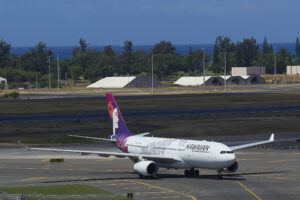
Reference from News: Teens Who Successfully Sued Hawaiʻi Over Climate Change Lose On Aviation